

|
Getting your Trinity Audio player ready...
|
Breast cancer is one of the most common cancers affecting women worldwide, and in India its incidence has been rising steadily. Yet one of the most effective tools against it is also one of the simplest: screening before symptoms appear. The question many women ask is when to begin.
As Dr P K Das, Medical Oncologist, points out, mammography screening recommendations vary by country, age, and individual risk. A woman in one country may be advised to start at 40, while another country’s programme may invite women only from 50. This is not a contradiction. Health systems weigh the benefits of early detection against costs, resources, and the chance of false alarms, and they reach different conclusions.
Why Risk Matters
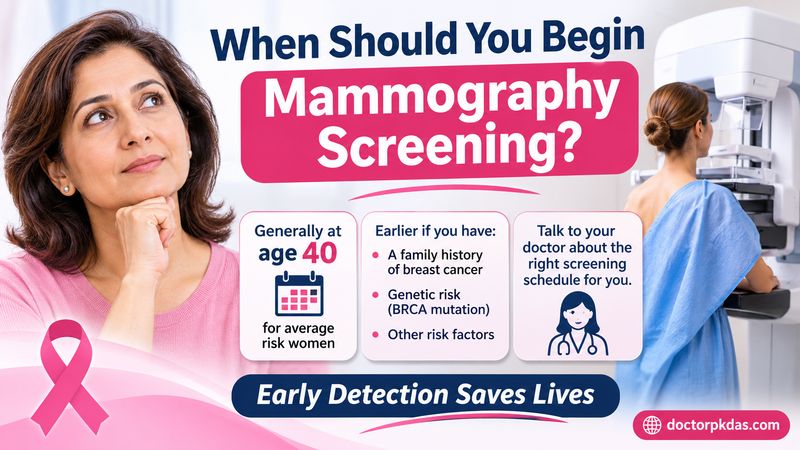
Age is only one factor. Women with a strong family history of breast cancer, or an inherited genetic risk, may need to begin screening earlier or be screened more often. If a mother, sister, or several relatives have had breast or related cancers, the usual timetable may not be enough. Inherited genetic risk matters just as much, and a woman who knows she carries such a risk should not simply follow the general schedule.
The Case for a Personalised Approach
The most sensible answer is a personal one. Dr Das advises women to discuss their age, family history, and overall health with their doctor to arrive at the right screening schedule. A conversation of this kind can settle questions that a general guideline cannot, such as:
- When should I have my first mammogram?
- How often should I be screened?
- Do I need additional tests because of my family history?
Doctors can also explain what screening can and cannot do, so women go in with realistic expectations rather than fear.
Why Early Detection Matters
The reason all of this matters is simple. Regular screening can help detect breast cancer early, when treatment may be more effective. Cancers found at an early stage are generally smaller and less likely to have spread, which often means less aggressive treatment and better outcomes. Waiting for a lump or other symptoms can mean the disease has already advanced.
Moving from Awareness to Action
Awareness campaigns, including the pink ribbon that has become a symbol of the cause, have done much to start conversations about breast health. But awareness must turn into action. Many women delay screening out of fear, cost, lack of access, or the belief that they are healthy and therefore safe. Family members, especially husbands, sons, and daughters, can help by encouraging the women in their lives to book that appointment.
The Takeaway
There is no universal starting line for mammography, but there is a clear next step: speak to your doctor. Know your family history, understand your risk, and agree on a schedule that fits you. As the message accompanying Dr Das’s advice puts it, Early Detection Saves Lives, and it begins with a single conversation.